
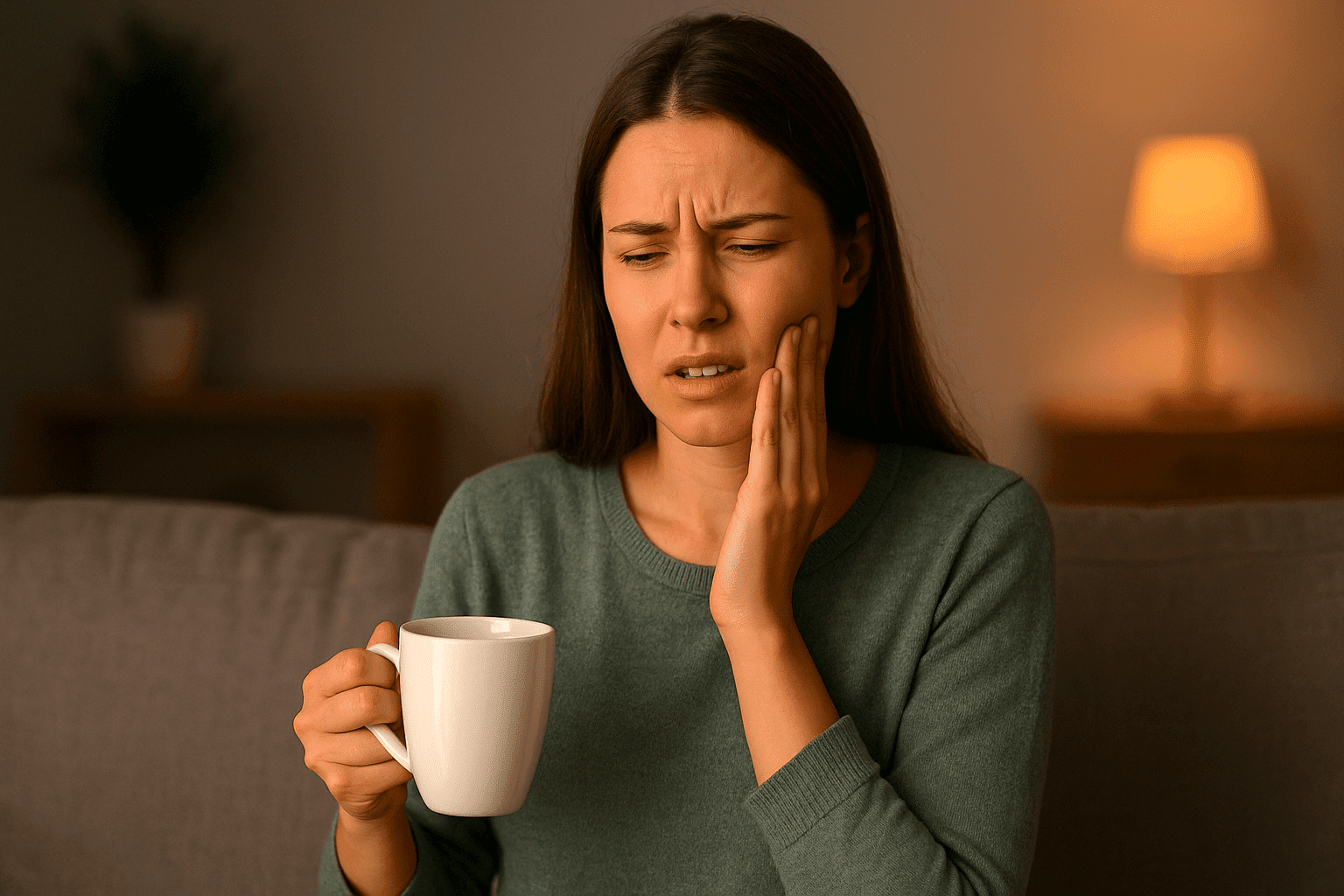
It started on a random Tuesday night.
I was sitting on my couch, sipping tea, and scrolling through my phone when I felt this sharp, shooting pain on the right side of my jaw. At first, I ignored it. You know that kind of pain you think will just go away on its own?
But within an hour, it became unbearable.
It was the kind of throbbing pain that travels up to your ear and doesn’t let you focus on anything else. I tried sleeping through it, but nope — the pain woke me up at 2 a.m.
And of course, my dentist’s clinic was closed.
That night taught me how awful tooth pain can be. But it also pushed me to learn what actually helps when you can’t rush to a dentist right away.
So here’s what I did—and what genuinely helped me calm the pain until I got proper treatment.
1️⃣ I Started With a Warm Salt Water Rinse
The first thing I remembered (thanks to my mom) was to rinse my mouth with warm salt water.
I mixed ½ teaspoon of salt in a glass of warm water, swished it around my mouth for about 30 seconds, and then spat it out.
It instantly gave me slight relief. The warmth eased the soreness, and the salt helped clean out any bacteria or food stuck near the tooth.
🩺 According to the Mayo Clinic, salt water rinses can help reduce inflammation and promote healing in the gums.
I repeated it every few hours, especially after eating.
2️⃣ I Used a Cold Compress (and It Worked!)
When the pain felt like it was pulsing, I grabbed an ice pack from the freezer (well, technically a bag of frozen peas) and wrapped it in a towel.
I held it against my cheek for about 15–20 minutes. The cold helped numb the area and reduce swelling.
It didn’t fix the cause, but it gave me that temporary calm I desperately needed.
3️⃣ I Took an Over-the-Counter Pain Reliever
Now, I’m not a fan of popping pills, but that night I had to.
I took an ibuprofen (Advil) — which helps reduce both pain and inflammation.
💊 As per WebMD, ibuprofen or acetaminophen can be effective for temporary toothache relief. However, it’s important not to overuse them or mix painkillers without a doctor’s advice.
I followed the instructions on the label carefully and only took one dose. Within about 30 minutes, the pain started to dull enough that I could rest.
4️⃣ I Tried Clove Oil (My Grandma’s Trick)
The next morning, my tooth was still sore, so I remembered something my grandma always said:
“If your tooth hurts, use a clove.”
I didn’t have fresh cloves, but I had clove oil (used for cooking). I soaked a small cotton ball in a few drops and gently pressed it against the affected tooth.
It burnt for a few seconds—but then came this cooling, numbing feeling that genuinely helped.
🌿 Clove oil contains eugenol, a natural compound known for its pain-relieving and antibacterial properties (source: Healthline, referencing studies published in the British Journal of Oral and Maxillofacial Surgery).
I used it twice that day — once in the morning and once before bed — and it helped calm the area significantly.
5️⃣ I Avoided Hot, Cold, and Sugary Foods
By the second day, I noticed something strange: even drinking water made my tooth hurt.
So, I started being careful about what I ate.
Here’s what I avoided for a few days:
- Ice-cold drinks or hot tea
- Sugary snacks (they made the pain worse)
- Hard foods like nuts or chips
Instead, I ate soft, room-temperature foods like yoghurt, oatmeal, and mashed potatoes. This small change made a big difference in keeping the pain from flaring up again.
6️⃣ I Kept My Mouth Super Clean
Even though brushing was painful, I knew leaving food particles behind would only make things worse. So, I switched to:
- A soft-bristled toothbrush
- Gentle brushing motion
- Rinsing after every meal
I also started flossing carefully — just enough to make sure no food was stuck between teeth.
🪥 According to Harvard Health Publishing, maintaining oral hygiene during a toothache is essential to prevent infection from spreading or worsening.
Within two days, the swelling around my gums started to go down slightly.
7️⃣ I Used a Mild Hydrogen Peroxide Rinse (Once Daily)
Now, this one should be done very carefully.
I mixed 3% hydrogen peroxide solution with an equal amount of water (half and half) and used it as a rinse for 30 seconds.
It helped disinfect the area and reduced the throbbing sensation. But never swallow it, and never use undiluted hydrogen peroxide.
⚠️ Always check with a dentist or healthcare professional before using hydrogen peroxide in your mouth.
8️⃣ I Called My Dentist (Even Though It Was the Weekend)
After managing the pain for two days, I finally called my dentist and explained everything.
They told me it was likely due to a cavity or gum infection and that home remedies were only a temporary fix.
I booked an appointment for Monday morning. Until then, I just continued with my routine — salt water rinses, gentle brushing, and clove oil for relief.
That appointment later revealed that I had a deep cavity close to the nerve, which required treatment. Thankfully, catching it early prevented a root canal.
What Actually Worked the Most for Me
Out of everything I tried, here’s what helped the most:
✅ Warm salt water rinse (for inflammation)
✅ Cold compress (for swelling)
✅ Clove oil (for natural pain relief)
✅ Ibuprofen (for quick relief)
Each one played a part — but together, they helped me survive the weekend without losing my mind.
What I Learned From That Toothache
That experience honestly changed how I take care of my teeth now.
I realised that tooth pain doesn’t just “happen overnight”. It builds up slowly, often because of neglect — like skipping flossing or delaying a dental checkup.
Now I:
- Visit my dentist every 6 months
- Use fluoride toothpaste
- Floss daily (even when I’m tired)
- Avoid too many sugary snacks
And most importantly, I never ignore that tiny twinge of pain anymore.
When to See a Dentist Immediately
While these remedies helped me, some signs mean you shouldn’t wait at all.
Call your dentist right away if you notice:
- Severe pain that doesn’t fade after 1–2 days
- Swelling in your jaw or face
- Fever or bad taste in the mouth
- Difficulty swallowing or opening your mouth
These can be signs of an infection that needs professional treatment (source: Mayo Clinic).
Final Reflection: What That Night Taught Me
That night, sitting in the dark with my cheek pressed to a bag of frozen peas, I promised myself one thing — I’ll never take my teeth for granted again.
Tooth pain can feel unbearable, but there’s comfort in knowing there are small, safe things you can do at home until help arrives.
If you’re going through it right now, trust me — you’re not alone. Try the steps above, stay calm, and make that dentist appointment as soon as you can. Your future self (and your teeth) will thank you. 💛
Disclaimer:
This post is based on personal experience and general health information from trusted sources (Mayo Clinic, WebMD, Harvard Health). It’s not medical advice. Always consult a qualified dentist or healthcare professional for diagnosis and treatment.
Thanks for reading. 🩷 And you also follow me on X/Twitter.